When to Size Up Diapers: Complete Guide for Parents
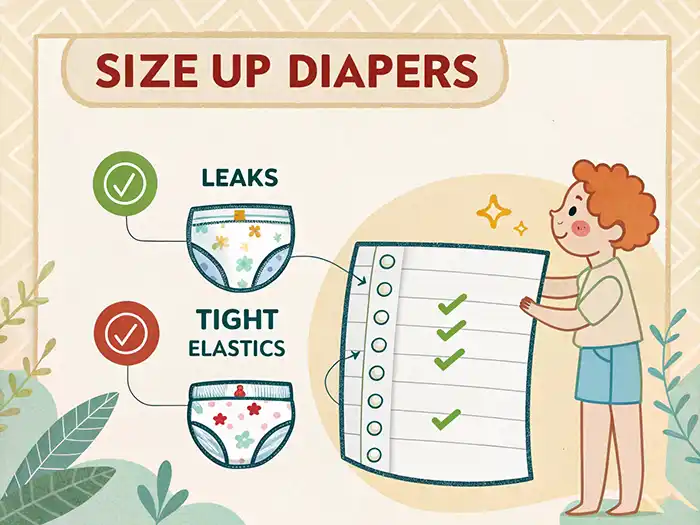
| Quick Reference: When to Size Up Diapers | |
|---|---|
| 1. Red Marks | Visible elastic marks on thighs or waist |
| 2. Leaks | Regular diaper leaks or blowouts |
| 3. Fit Issues | Tabs don't reach middle of waistband |
| 4. Weight Range | Baby near upper weight limit |
| 5. Coverage Problems | Back or bottom not fully covered |
Choosing the right diaper size is crucial for your baby's comfort and preventing messy situations. This comprehensive guide will help you navigate diaper sizing with confidence, ensuring your baby stays comfortable and dry throughout their development stages.
Understanding Diaper Size Charts
Diaper sizing can be more complex than it appears at first glance. According to the American Academy of Pediatrics, proper diaper fit is essential not only for comfort but also for preventing skin irritation and maintaining proper hygiene.
While weight ranges provide a starting point, it's important to understand that these are merely guidelines. Every baby's body shape is unique, and Ffactors like growth rate, activity level, and time of day can all influence the ideal diaper size.
Weight Range Overlaps Explained
You might notice significant overlap between diaper sizes. For instance, a 12-pound baby could potentially wear either Size 1 or Size 2. This overlap exists because:
- Babies with different body shapes may need different sizes despite weighing the same
- Some babies need different sizes for day versus night use
- Growth spurts might necessitate temporary size adjustments
- Different brands may fit differently despite similar weight ranges
Brand Variations and Considerations
According to Consumer Reports, diaper sizes can vary significantly between brands. Some considerations include:
- Premium brands often run larger than budget options
- Some brands offer intermediate sizes (like Size 1-2 or 3-4)
- Specialty diapers (overnight, swim) may require different sizing
- International brands might use different sizing standards
Special Sizing Situations
Certain situations may require special consideration when choosing diaper sizes:
- Premature Babies: May need preemie sizes or specialized products
- Multiple Births: Twins or triplets might need different sizes despite being the same age
- Growth Spurts: May require temporary size adjustments
- Medical Conditions: Some conditions might affect diaper sizing needs
6 Clear Signs Your Baby Needs a Bigger Diaper
Recognizing when to size up is crucial for maintaining your baby's comfort and preventing unnecessary messes. According to pediatric experts at Mayo Clinic, these signs indicate it's time for a larger diaper size:
1. Frequent Leaks and Blowouts
When diapers become too small, they can't properly contain waste. Look for these specific indicators:
- Regular leakage during normal movement
- Frequent blowouts up the back
- Side leakage during sleep
- Leaks despite proper diaper placement
2. Visible Red Marks and Compression Signs
Physical indicators on your baby's skin can be clear signs of a too-tight diaper:
- Red lines around the waist
- Marks on upper thighs
- Indentations from elastic
- Irritation around leg openings
3. Diaper Coverage Issues
Proper coverage is essential for diaper effectiveness:
- Back waistband sits too low
- Front doesn't reach belly button
- Leg holes seem tight or restricted
- Buttocks not fully covered

How to Check for the Perfect Diaper Fit
Achieving the perfect diaper fit requires a systematic approach and attention to detail. According to HealthyChildren.org, proper fit is crucial for both comfort and functionality.
The Comprehensive Fit Test
Waistband Check
- Place two fingers under the waistband
- Fingers should slide easily but with slight resistance
- Waistband should sit just below belly button
- No gaps when baby lies on their back
Leg Opening Assessment
- One finger should fit comfortably in leg holes
- Elastic should create gentle seal without compression
- No red marks after removal
- Leg cuffs should be pulled out and not tucked in
Overall Coverage Evaluation
- Back coverage extends to mid-back
- Front reaches natural waist
- No exposure when baby moves
- Fasteners land in designated zones
Professional Fitting Recommendations
Pediatric experts recommend these additional checks:
- Test fit in different positions (sitting, standing, crawling)
- Check fit both before and after feeding
- Evaluate fit with clothing on and off
- Monitor fit throughout the day
Common Problems with Wrong Diaper Sizes
Issues with Too-Small Diapers
Using diapers that are too small can lead to numerous problems:
Physical Discomfort
- Skin irritation and rashes
- Restricted blood circulation
- Chafing and rubbing
- Pressure marks on skin
Functional Problems
- Reduced absorbency capacity
- Compression leaks
- Frequent blowouts
- Waste containment issues
Complications of Oversized Diapers
According to pediatric research, too-large diapers present their own set of challenges:
- Gap leakage around legs and waist
- Reduced mobility for crawling babies
- Improper waste distribution
- Increased risk of clothing soiling
Preventing Leaks and Blowouts
Strategic Positioning Techniques
Correct Diaper Placement
- Center placement on bottom
- Equal front and back coverage
- Proper leg cuff positioning
- Tab placement optimization
Optimal Changing Schedule
According to NICHD guidelines, timing is crucial:
- Change before/after feedings
- Pre-sleep changes
- Post-activity changes
- Regular interval checks
Activity-Specific Adjustments
- Swimming and water activities
- Extended travel considerations
- Overnight protection strategies
- Active play modifications
Additional Prevention Tips
- Use overnight diapers for extended wear
- Consider diaper boosters when needed
- Adjust based on feeding schedule
- Monitor humidity and temperature effects
Smart Tips for Diaper Size Transitions
Strategic Transition Planning
According to Consumer Reports, a well-planned transition can save both money and frustration.
Before Making the Switch
- Monitor current size fit for 3-5 days
- Track leak patterns and frequency
- Document diaper change timing
- Note any comfort issues
Smart Purchasing Strategy
- Buy small packs initially (18-24 count)
- Test different brands in new size
- Keep partial stock of current size
- Calculate daily usage requirements
Average Daily Diaper Needs
| Age Range | Diapers Per Day | Weekly Amount |
|---|---|---|
| 0-1 month | 10-12 | 70-84 |
| 1-5 months | 8-10 | 56-70 |
| 5-9 months | 6-8 | 42-56 |
| 9-12 months | 4-6 | 28-42 |
Practical Transition Tips
- Use larger size for nighttime first
- Rotate between sizes during transition
- Monitor fit after feedings
- Adjust based on activity levels
Managing Unused Diapers
Responsible Diaper Management Solutions
Community Donation Opportunities
Connect with organizations through the National Diaper Bank Network:
- Local diaper banks and distribution centers
- Women's shelters and crisis centers
- Family resource centers
- Religious organizations and charities
- Daycare facilities and nurseries
Retail Exchange Programs
- Store-specific exchange policies
- Manufacturer warranty programs
- Online marketplace reselling
- Subscription service adjustments
Creative Repurposing Ideas
- Emergency preparedness kits
- First aid supply storage
- Gardening and plant protection
- Cleaning and polishing materials
- Art and craft projects
Proper Storage Guidelines
- Keep in cool, dry place
- Maintain original packaging
- Avoid direct sunlight
- Check expiration dates
Final Thoughts and Expert Recommendations
Essential Points to Remember
- Regular size assessment is crucial
- Monitor growth patterns closely
- Consider activity levels when sizing
- Plan transitions strategically
"Proper diaper sizing is not just about comfort—it's about health, development, and daily well-being. Take time to ensure the right fit for your baby's unique needs."
- Pediatric Care Specialists
This comprehensive guide is brought to you by Softouch Childsea, your trusted partner in baby care products. For more information about our premium diaper solutions and other products, visit www.softouch.top.